
Development blog
Tag: Basics
-

Basics – Index-based generation
When working with repeaters and groups in Paragraphic each element and repeater iteration is assigned a number, or index as it’s called in Paragraphic. These different indexes can be used both for selecting what elements to apply changes to and to serve as input to generate dynamic repetitions that gradually change. This video below covers…
-
Basics – Connections and input nodes
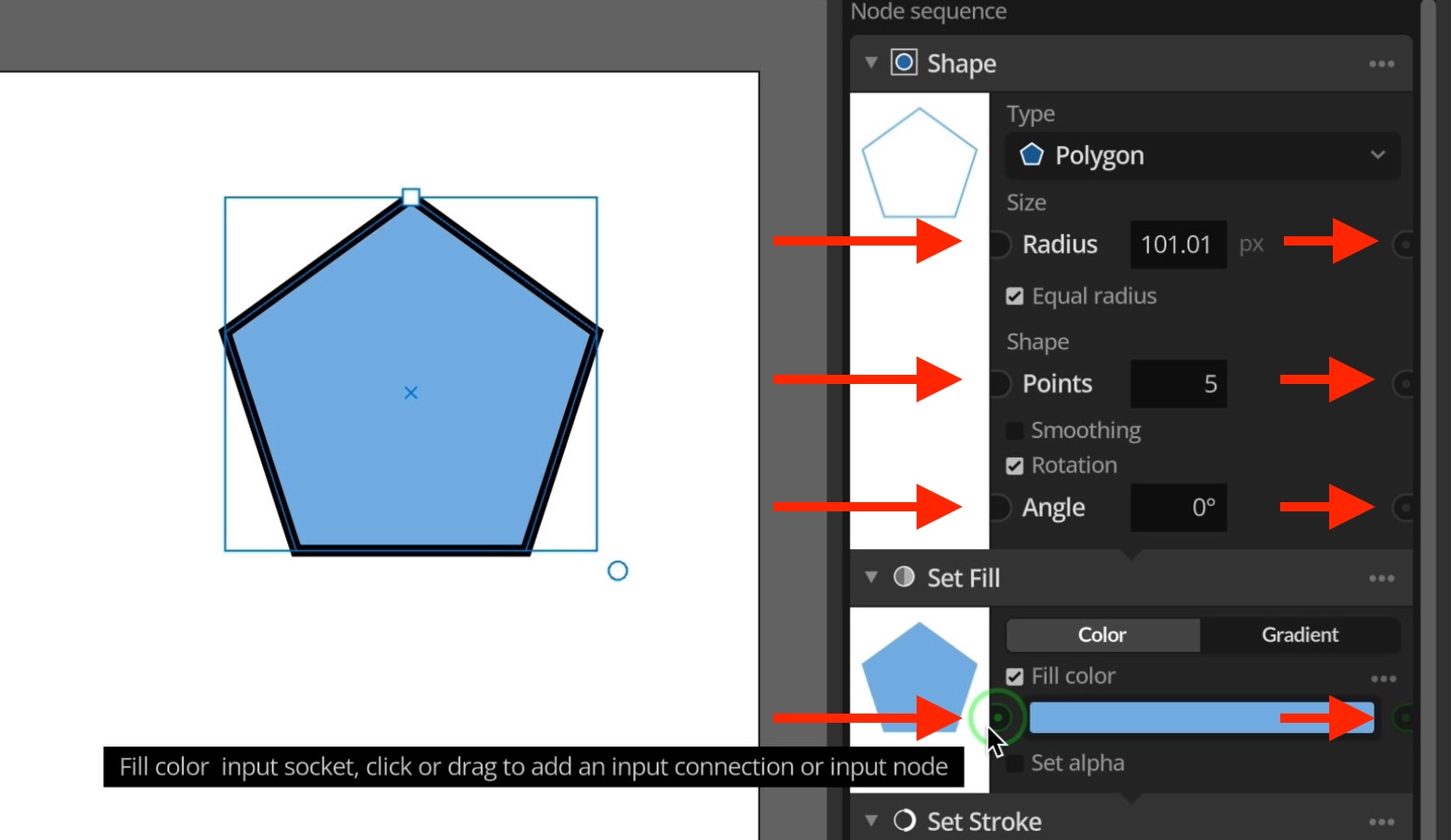
You can do a lot by just using the various tools and nodes in Paragraphic and manually adjusting their parameters. But to truly unlock the potential of Paragraphic you need to understand how to automatically control properties via connections and input nodes. This video below covers introduces these concepts, or you can read about them…
-
Basics – Node Apply to modes
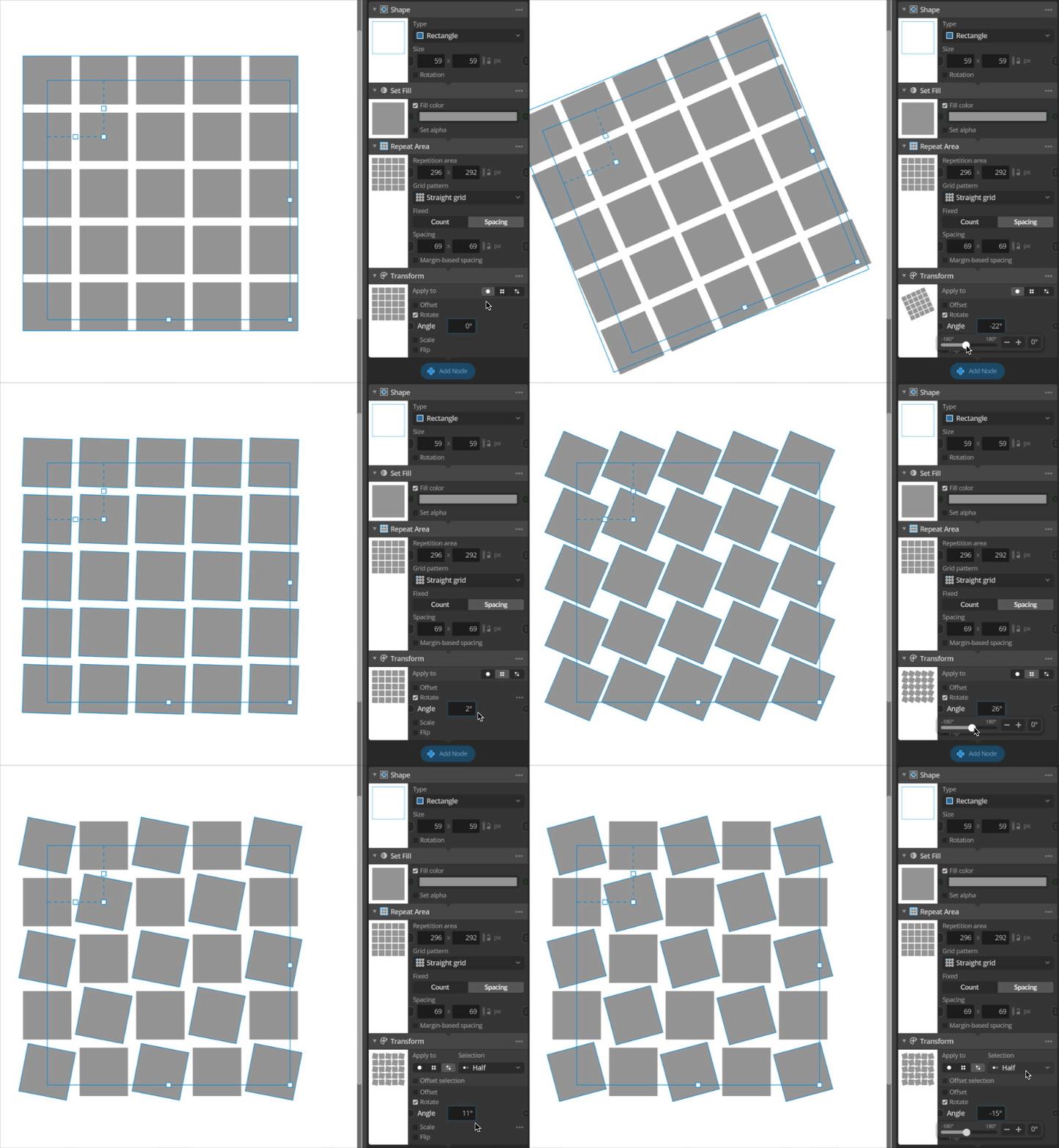
Individual shapes and other objects in layers are referred to as elements in Paragraphic (See Basics – Layers and Elements). Elements can be created and repeated in various patterns by nodes (see Basics – Repeaters), but they can also be modified. For example changing their color, or applying transformations like rotating or scaling them. This…
-
Basics – Repeaters
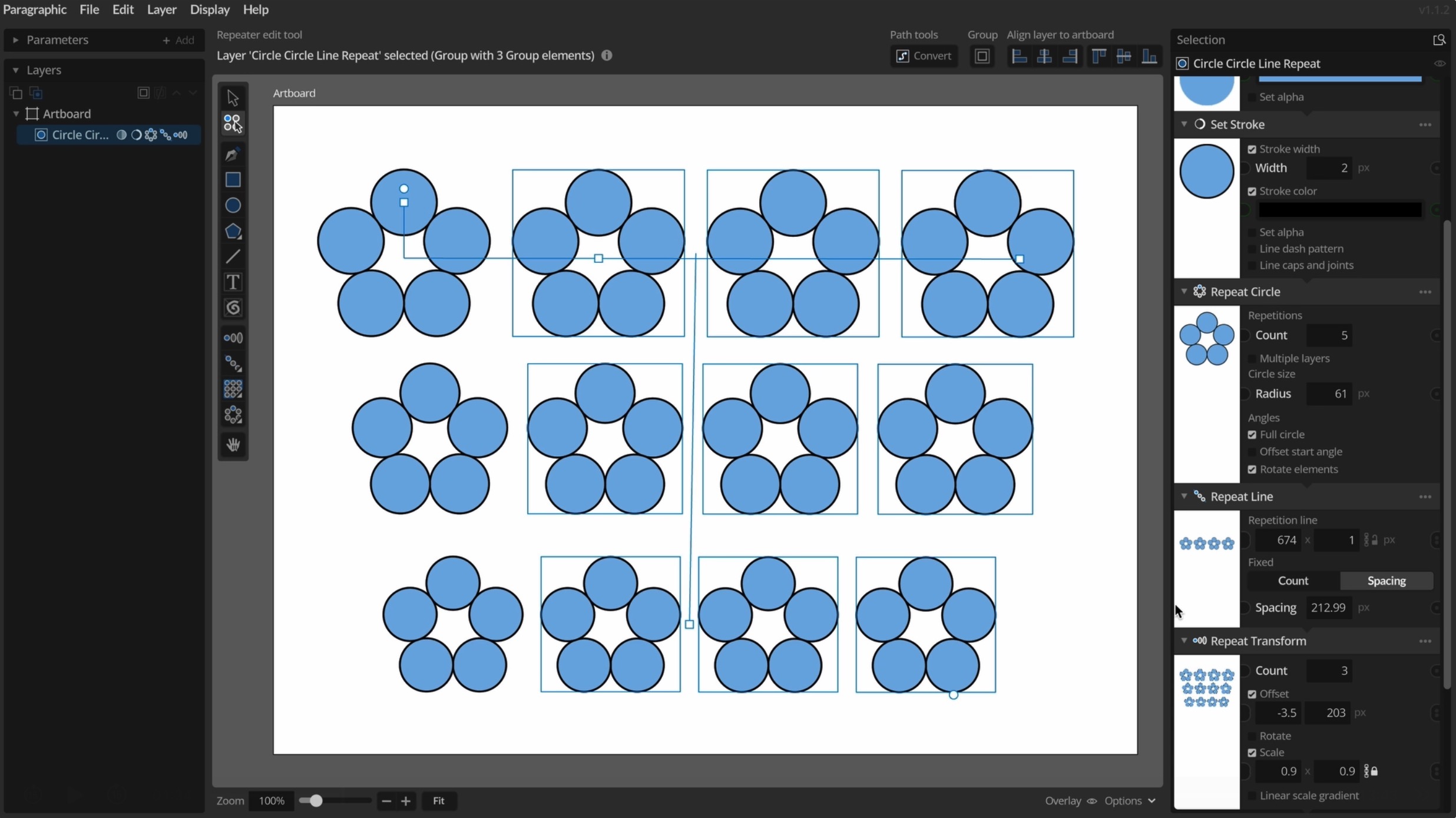
Most use cases for Paragraphic will involve repeating elements in patterns in one way or another, and this is done by what is called Repeater layer nodes. The Repeater nodes take the existing content of the layer and adds repeated copies of it to let you create patterns of various types. This video gives you…
-
Basics – Layers and Elements
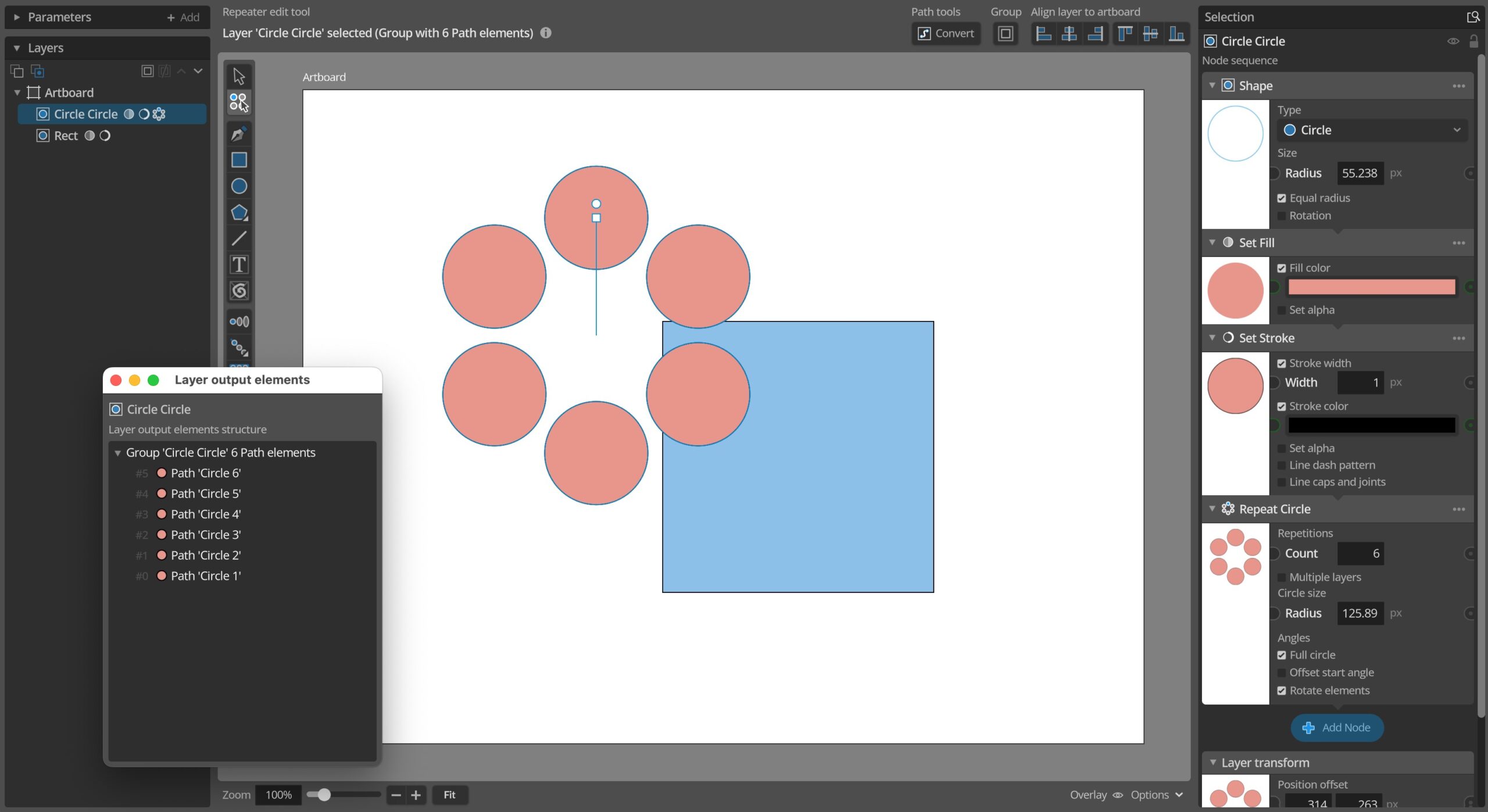
Individual shapes and other objects in layers are referred to as elements in Paragraphic. When you draw a simple shape, like for example a circle, this results in a new layer for the shape in your document. This layer in turn generates a circle shape element as it’s output. Layers The layers are represented in…